How to choose sunscreen in Kenya: SPF, labels and everyday use
Know what to check on a sunscreen label, why reapplication matters and how to assess the Dr Rashel Aloe Vera SPF 50+ product listed by Zuvelle.
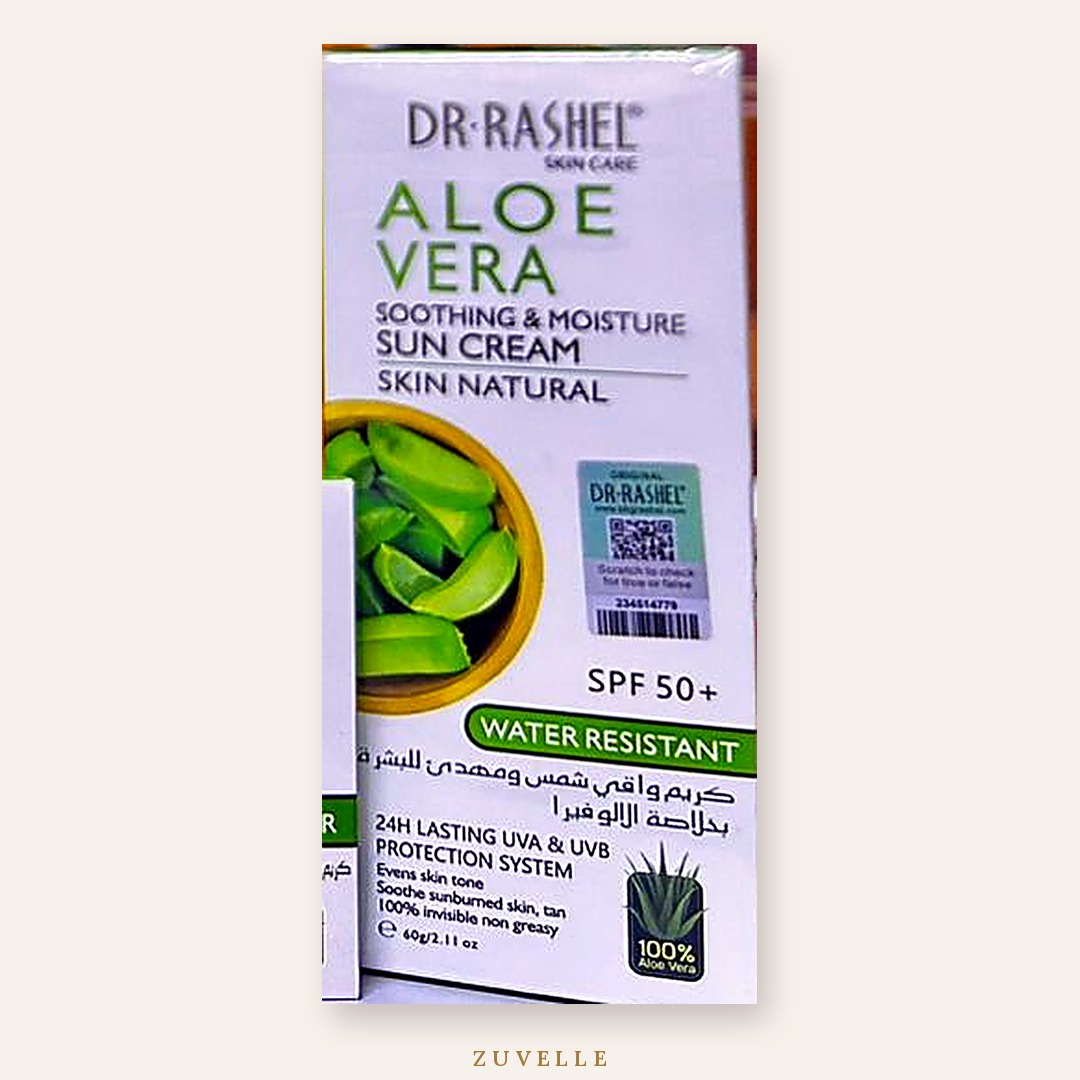
A sunscreen that suits your routine is more useful than a bottle you avoid wearing. Before choosing by price or an SPF number alone, check what the label actually promises, how you will use it and whether the texture feels comfortable on your skin.
Three things to check on the label
- SPF 30 or higher. SPF is primarily a measure of UVB protection. It does not tell you how many hours you can stay outside.
- Broad-spectrum protection. Look for protection against both UVA and UVB. A high SPF number alone does not confirm this.
- Water-resistance information. If you will sweat or swim, check the stated duration and directions. Water-resistant does not mean waterproof.
Also check the seal, expiry date and storage directions. An overheated or expired product is not a good bargain. Read the back of the actual bottle, not only the website heading, because packaging and formulations can change.
The sunscreen listed in Zuvelle's range
Zuvelle lists Dr Rashel Aloe Vera Soothing Sun Cream SPF 50+. Treat “SPF 50+” as the product's stated label information. We have not independently tested this product's SPF, UVA protection, water-resistance or wear time. Ask for the current label if you need to confirm those properties before buying.
Do not rely on any “24-hour” marketing phrase as permission to skip reapplication. Choose an alternative if you cannot establish the protection you need from clear packaging and trustworthy product information. Sunscreen selection should not depend only on a retailer's recommendation.
Make application part of the plan
Apply generously and evenly to exposed skin before going outside, following the product directions. Include easily missed areas such as ears and neck. Reapply approximately every two hours outdoors and after swimming or sweating, as directed. Shade, clothing and a suitable hat add protection.
A practical workday example: apply before your commute, then plan reapplication if you spend lunch outdoors or travel outside later. Carry the bottle when you need it. Do not assume makeup or a few drops mixed into moisturiser provide the labelled protection.
Dark skin and uneven-looking tone
Darker skin still needs protection. For people concerned about dark spots, a tinted sunscreen containing iron oxides may also help reduce the effects of visible light. The Zuvelle listing does not establish that its aloe sunscreen contains iron oxides, so do not assume it offers that feature.
If a brightening routine is your goal, keep sun protection alongside any serum. Read the dark-spots guide and vitamin C guide. These products cannot promise to erase pigmentation, and persistent or changing patches need professional advice.
Choose a texture you can use consistently
For oily skin, compare lighter textures and look for non-comedogenic labelling where appropriate. Dry skin may prefer a moisturising texture. Sensitive skin needs careful ingredient checks; “aloe” is not proof that fragrance or other triggers are absent.
Introduce new products carefully, stop if you develop a reaction and do not apply a new cosmetic onto an active rash to test it. Our skin-type guide can help you describe your needs before contacting Zuvelle. Clinical advice is appropriate for recurrent reactions or a diagnosed skin condition.
Sources and editorial note
Written by the Zuvelle editorial team, 28 October 2026. General skincare education with a commercial interest in the products linked. This article has not been reviewed by a dermatologist. Ingredient guidance does not establish clinical performance of a specific product. Follow the actual product label and consult a qualified clinician for medical concerns.